
A brief history of the humble Pancake
- Details
- Category: Food & Drink
- Created on Tuesday, 17 February 2015 08:05
- Written by Northern Living
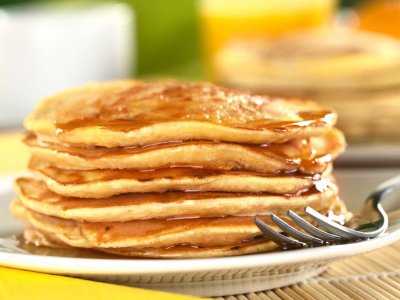 A pancake is a flat cake, often thin, and round, prepared from a starch-based batter and cooked on a hot surface such as a griddle or frying pan. In Britain, pancakes are often unleavened, and resemble a crêpe. In North America, a raising agent is used (typicallybaking powder). The North American pancake is similar to a Scotch pancake or drop scone.
They may be served at any time with a variety of toppings or fillings including jam, fruit, syrup, chocolate chips, or meat. In America, they are typically considered to be a breakfast food. In Britain they are associated with Shrove Tuesday, commonly known as Pancake Day, when perishable ingredients had to be used up before the fasting period of Lent began.
Our prehistoric ancestors just may have eaten pancakes.
Analyses of starch grains on 30,000-year-old grinding tools suggest that Stone Age cooks were making flour out of cattails and ferns—which, researchers guess, was likely mixed with water and baked on a hot, possibly greased, rock. The result may have been something at least along the same lines as a pancake.
Pancake Day - Shrove Tuesday
By the time Otzi the Iceman set off on his final hike 5,300 years ago, pancakes—or at least something pancake-like—seem to have been a common item of diet. Otzi, whose remains were discovered in a rocky gully in the Italian Alps in 1991, provided us with a wealth of information about what a dinner in the Neolithic ate. His last meals—along with red deer and ibex—featured ground einkorn wheat. The bits of charcoal he consumed along with it suggest that it was in the form of a pancake, cooked over an open fire.
Whatever the age of the primal pancake, it’s clearly an ancient form of food, as evidenced by its ubiquity in cultural traditions across the globe. The ancient Greeks and Romans ate pancakes, sweetened with honey; the Elizabethans ate them flavoured with spices, rosewater, sherry, and apples. They were traditionally eaten in quantity on Shrove Tuesday or Pancake Day, a day of feasting and partying before the beginning of Lent.


Login
Translate
