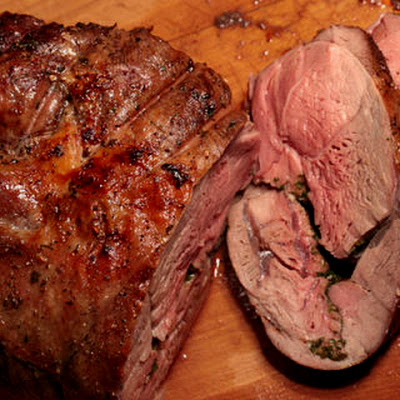
 In Saxon times autumn and early winter were the time when surplus cattle were slaughtered for their meat at the end of their first or second year, or as their productivity as breeding stock or their strength to pull ploughs declined. Surplus young sheep were also slaughtered during the autumn and additional meat sources coming from older breeders that would mainly have been kept for their wool. Older fowl were also killed as keeping them alive through the winter months was costly in grain with no reward of eggs.
So what might a seasonal feast have included? Here are a few known recipes from the era. Food wasn’t all pottage and mouldy bread in the 6th century, the Anglo-Saxons had wide trading networks, so the ingredients have quite a Mediterranean feel.
Stuffed chicken
3½ lb (1.6kg) chicken
4 hard-boiled eggs
2 medium onions
½ pt (275 ml) chicken stock
1 small bunch of parsley
1-3 tbs (30-45 ml) lard
salt & pepper
Prepare the chicken for stuffing and for spit or oven roasting. Separate the egg whites and yolks. Slice the onions thinly. Bring the stock to the boil, and blanch the onions and parsley for 2-3 minutes. Remove the parsley and cook the onions until soft. Drain, reserving the remaining stock. Cool.
Cut off the parsley stalks and chop the leaves with the egg yolks, lard and seasoning. Add the onion. Stuff the chicken with the mixture, then truss it. Roast the chicken in the usual way, with the reserved stock in the drip tray or roasting tin. Use it to baste the chicken and to make a thin or slightly thickened gravy with the pan juices and some extra stock. If wished, garnish with the egg whites, chopped, and a little extra parsley.
Roast Mutton
Ingredients 1 leg mutton (4-5 lbs)
Generous slosh of cheap red wine
3-6 cloves garlic, peeled
4 juniper berries
Several sprigs of rosemary
Salt and pepper
Gravy browning (check packet for amount) or 2 teaspoons (30 ml) cornflour
Method You can ask your butcher to bone the mutton, which will make it easier to carve. This is also worth doing if you want to use the leg bone to make knife handles or whatever, because roasting would make the bone brittle. You can stuff the cavity with a mix of chopped prunes, hazelnuts, finely chopped onions and fresh herbs. Remember to allow for any stuffing when calculating the cooking time.
Cut slots in the meat with a sharp knife. Push the garlic, juniper berries and rosemary into these slots. How much of each you use depends on your taste; too much juniper will make it bitter, and not everybody is mad about garlic. Heat the oven to 150o C (300o F). Put the meat into a roasting dish. Sprinkle it with salt and pepper and then slosh wine over it. Put the lid on the roasting dish, or cover the joint with aluminium foil.
Roast the meat for 40 minutes per lb (450 g): if necessary, add more wine during cooking to keep the dish from drying out. Remove the lid or foil for the last half hour of cooking. When it's cooked, put the meat onto a carving platter to rest while you make gravy with the cooking juices.
To make the gravy, put the roasting dish on the hob and add some water (or cooking juices from vegetables). You should get nearly a pint of gravy. Thicken the gravy with gravy browning, or mix the cornflour with a little water until smooth, and stir this into the gravy. Keep stirring until the gravy has thickened. Strain it into a warmed jug, spoon the fat off the top of the gravy and serve
Curd flan
‘Take nessh chese, and pare it clene, and grind hit in a morter small, and drawe yolkes and white of egges thorgh a streynour, and cast there-to, and grind hem togidre; then cast thereto honey, butter and salt, and put together in a coffyn of faire paast, and lete bake ynowe, and then serue it forthe.’
‘nessh chese’ is fresh soft curd cheese
‘coffyn of faire paast’ is a light pastry case.