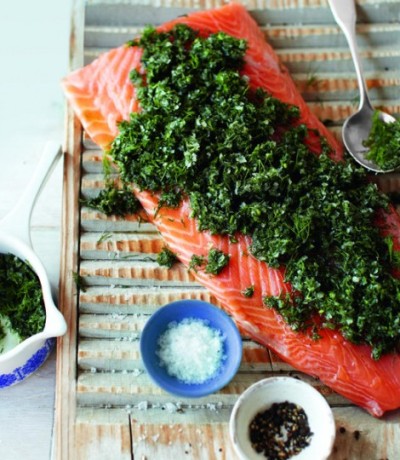
 Until recently the origins of Gravadlax were presumed to date back to the Middle Ages
“During the Middle Ages, gravlax was made by fishermen, who salted the salmon and lightly fermented it by burying it in the sand above the high-tide line. The word gravlax comes from the Scandinavian word grav, which literally means "grave" (in Swedish, Norwegian, Danish), and lax (orlaks), which means "salmon", thus gravlax means "buried salmon". “ Wikipedia - http://en.wikipedia.org/wiki/Gravlax
However an archaeological survey team in Siberia have recently sent a Birch bark parcel for analysis and radio carbon dating. According to the spectral analysis lipids within the parcel were from Salmon and the radio carbon date was broadly in the 2000 to 2500 BC range. Although the date was not very specific due to contamination from partially melted permafrost in the vicinity, the find certainly pre-dates the middle ages by a thousand years or more.
So In celebration of our Bronze Age ancestors and their refined taste and knowledge of food preservation, here's a Gravlax / Gravadlax recipe:-
In the bronze age if seems they preferred Birch bark to cling film, feel free to go with tradition if you wish.....
Ingredients:-
2 sides of salmon, about 1kg each
100g sea salt
150g caster sugar
8 black peppercorns, lightly crushed
60ml Vodka
150g bunch fresh dill, finely chopped, plus an extra 100g
Method:-
1. Lie the salmon sides skin-side down on a work surface and run your finger along the flesh to check for pin bones. Using tweezers, remove any you find.
2. Place a double layer of cling film on the work surface. (It needs to be large enough to wrap the 2 fillets, sandwiched together.) Place one of the fillets on top, skin-side down.
3. Make the cure. Mix the salt, sugar and peppercorns in a bowl. Add the Vodka and chopped dill, then mix well. Spread the mixture evenly over the fillet. Top with the other fillet, flesh-side down, to form a sandwich.
4. Wrap tightly in the cling film and place in a ceramic or glass dish that’s just big enough to hold the fish snugly. Weigh down with a small chopping board and some weights (full cans are ideal) and chill for 24-48 hours, turning every 12 hours or so. Drain off any liquid that collects in the dish.
5. Unwrap the salmon and rinse off the cure under cold water, then pat dry with kitchen paper. Finely chop the extra dill, then spread evenly over the flesh of both fillets.
6. The gravadlax can now be sliced and eaten, or will keep in the fridge for up to a week, re-sandwiched and wrapped in fresh cling film. When ready to eat, unwrap, separate and slice. Serve on rye bread with black pepper and a squeeze of lemon, or with mustard and dill sauce.
{fcomment}